


 Hot News

 Sep 07 2026
 163
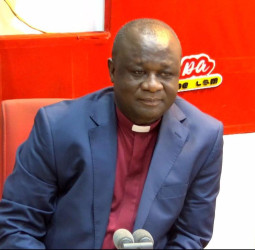
163The Ghana Catholic Bishops’ Conference has rejected calls by the opposition New Patriotic Party (NPP) for Chief Justice Paul Baffoe-Bonnie to resign over comments he made during visits to the Social Security and National Insurance Trust (SSNIT) and the Minerals Income Investment Fund (MIIF).
The NPP, in a statement issued on Thursday, September 3, 2026, called for the Chief Justice’s resignation, arguing that his comments during the engagements raised concerns about his neutrality and the political independence of the Judiciary.However, the Catholic Bishops have described the demand as disproportionate, saying the available evidence does not establish that the Chief Justice is partisan or that the Judiciary has been compromised.
In a statement issued on Sunday, September 6, the Conference said the Chief Justice was entitled to visit public institutions, assess their performance and acknowledge improvements without such actions being considered improper.
It acknowledged, however, that some of his remarks could create concerns about the appearance of judicial impartiality.
The Bishops said particular attention had been drawn to the Chief Justice’s reference to the “past eight years,” noting that the expression could easily be interpreted within Ghana’s political context as a comparison between the current administration and its predecessor.They said this had the effect of making what could have been a straightforward assessment of SSNIT and MIIF appear, at least in perception, to carry a partisan political judgment.
The Conference also acknowledged concerns raised by the Ghana Centre for Democratic Development (CDD-Ghana) that the comments could create an impression of political endorsement and undermine public confidence in the neutrality of the Judiciary.
However, the Bishops said they had taken note of the Judicial Service’s explanation that the Chief Justice’s comments were made in good faith and were not intended to compromise judicial independence
The Judicial Service, they noted, had also reaffirmed the Chief Justice’s commitment to judicial integrity and equality before the law.“We receive that clarification in good faith,” the Conference said.
Despite rejecting the resignation demand, the Bishops said the controversy should serve as a reminder of the importance of judicial ethics and public perception.
They stressed that the Chief Justice occupies a particularly sensitive position because the courts may be required to determine disputes involving the government, political parties and public institutions.
“Judicial independence is not only a matter of actual impartiality; it also depends on the visible, unmistakable appearance of impartiality,” the Conference said.
The Bishops nevertheless maintained that the Chief Justice’s comments, by themselves, do not provide sufficient grounds to conclude that he is politically partisan or that the Judiciary has been compromised.“Such conclusions would go well beyond the evidence available to us, and calls for his resignation on this basis alone strike us as disproportionate to the offence,” they said.
The Conference said the Chief Justice, like any citizen, was entitled to his personal convictions but must exercise greater caution in his public conduct because of the office he occupies.
It suggested that he could have commended the progress recorded by SSNIT and MIIF without comparing the performance of successive governments.
The Bishops further urged both the governing party and the opposition to exercise restraint in their response to the controversy.
They cautioned the governing party against interpreting criticism of the Chief Justice as an attack on its record, while urging the opposition not to use his comments as evidence that the courts had been captured.
“The governing party ought not to treat criticism of the Chief Justice as an attack on its own record, nor should the opposition treat his remarks as proof that the courts have been captured,” the Conference said.
The Bishops called on all political actors and public officials to uphold restraint and protect confidence in Ghana’s democratic and judicial institutions regardless of which party is in power.
Credit:citinews
Leave a Reply
Cancel Reply
Popular News



VOTE FOR CHAMPION

Who Wins NPP National Chairman

Recent News

Gallery





Recent Comment
-

Dr. Bawumia is ashamed of himself that is he making those unguided comments

-
Is this real? Because someone of us are novices we don't much about the operations tenet. Good morning
-
Please why you don't consort the Pragya operators Leaders for their side of view, Don't be a one side reporter because your station is professional, Please news editor tell your news reporter and come once again and the Pragya leadership and know their side of view THANK YOU. I am the Chairman of the Pragya operators association This is my contact number 0546801415 you can call me.