

The Majority in Parliament has defended the Bank of Ghana's 2025 financial report, describing its recorded losses as a deliberate and necessary cost of restoring macroeconomic stability and rebuilding confidence in Ghana's economy.
Majority defends BoG 2025 report, points to record reserves, cedi gains and 6% economic growth
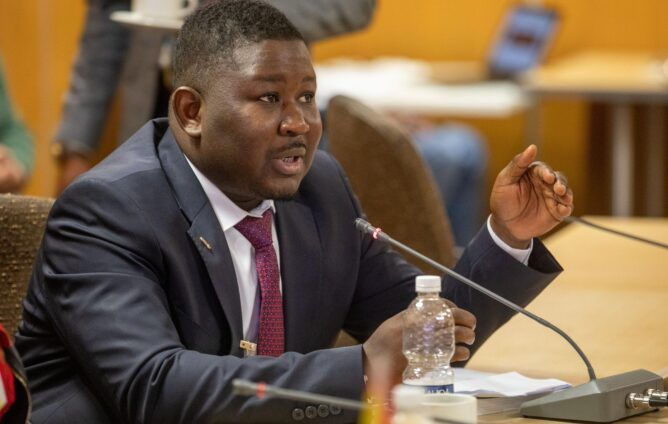

Addressing the Parliamentary Press Corps on Thursday, April 30, a member of the Parliamentary Select Committee on Finance, Mr. Attah-Issah, said the central bank's policy actions had delivered substantial gains despite concerns raised over its financial statements.
Mr. Attah-Issah said the Ghana cedi appreciated by 41 per cent in 2025, ranking it among the strongest-performing currencies in emerging markets. He added that Ghana's gross international reserves climbed from $9.1 billion at the end of 2024 to $13.8 billion by the close of 2025, and further increased to $14.5 billion by February 2026.
"This is the highest reserve Ghana has ever recorded," he stated.
The Majority also pointed to significant improvements in borrowing costs. The policy rate declined from 27 per cent at the end of 2024 to 14 per cent by March 2026, while average lending rates dropped from 30.2 per cent to 17.7 per cent over the same period.
"That means cheaper loans for small business owners trying to expand, farmers buying inputs, traders stocking their shops, and young couples buying their first homes," Mr. Attah-Issah said.
Ghana's public debt ratio also reduced from 62.5 per cent of GDP to 45 per cent, and the economy recorded 6 per cent growth in 2025, exceeding the projected 4 per cent target. "Business and consumer confidence are at record highs," he added.
Responding to concerns over losses in the central bank's accounts, the Majority argued that they reflected deliberate policy measures to tame inflation and build reserves. Mr. Attah-Issah explained that to reduce inflation, the Bank of Ghana had to mop up excess liquidity by issuing short-term bills and paying interest. The cost of these operations rose from GH¢8.6 billion in 2024 to GH¢16.7 billion in 2025.
"The cost was real, and the result was real as well," he noted.
The Majority also defended the central bank's gold purchase programme, noting that Ghana accumulated approximately 111 tonnes of gold in 2025, compared to less than one tonne in 2021. "The gold itself has not been lost. The results are real," he said.
On the Bank of Ghana's negative equity position, Mr. Attah-Issah said the situation dates back to 2022 and the Domestic Debt Exchange Programme (DDEP), which imposed significant impairments on the central bank's holdings of government securities. He stressed that the Bank of Ghana remains fully capable of carrying out its core functions and drew comparisons with similar situations at the European Central Bank and the United States Federal Reserve.
"The Bank's authority comes from law, not from its balance sheet," he said.
The Majority expressed confidence in a stronger economic outlook for 2026, citing lower inflation, reduced interest rates, a stable exchange rate and ongoing reserve accumulation reforms.
"The work has been done. Inflation is down. The cedi is stronger. Reserves are at record levels. Lending rates are falling. Public debt is lower. The economy is growing. Confidence is back," Mr. Attah-Issah concluded.






 Sompaonline.com offers its reading audience with a comprehensive online source for up-to-the-minute news about politics, business, entertainment and other issues in Ghana