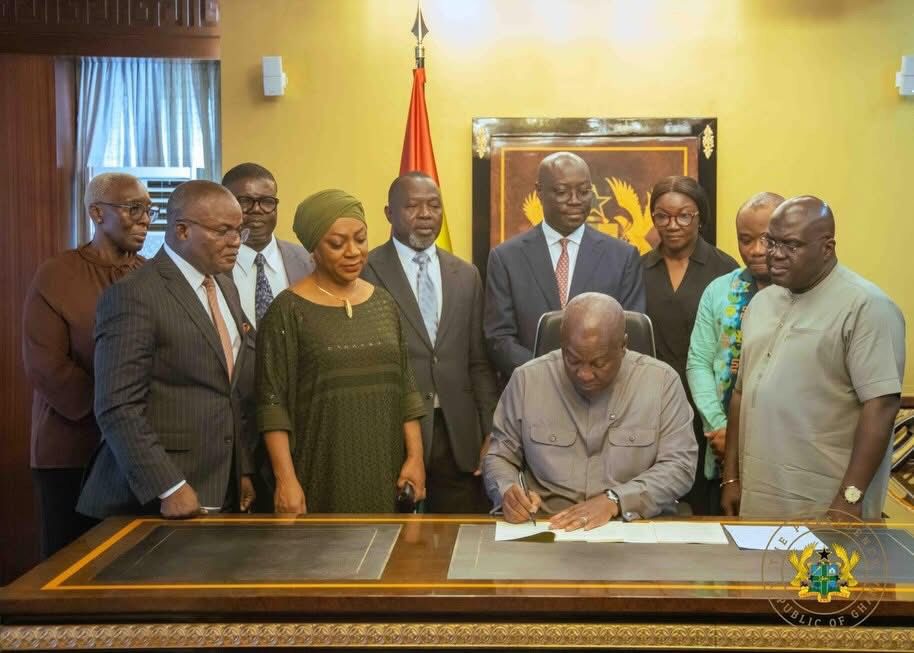

President John Dramani Mahama has signed into law three major bills recently passed by Parliament, describing them as transformative measures aimed at strengthening governance, accountability, and legal education in Ghana.
In a statement shared on his official Facebook page before departing Accra for Nairobi, the President announced that he had assented to the Legal Education Act, the Value for Money Office Act, and the Governance Advisory Council Act.
According to President Mahama, the new Legal Education Act is expected to significantly reform professional legal training in the country by ending the exclusive authority of the Ghana School of Law over professional legal education.
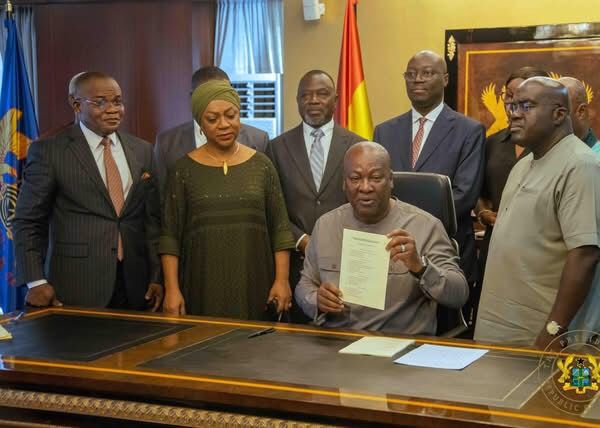
He explained that the law would introduce competition and create opportunities for more institutions to offer professional legal training while maintaining high standards in the justice system.
“The Legal Education Act is a game-changer for our justice system,” President Mahama stated, adding that the move would provide opportunities many aspiring lawyers had long awaited.
The President also noted that the newly established Value for Money Office would serve as a key mechanism in reviewing major government contracts and expenditures to ensure prudent use of public funds.
He said the office would help prevent inflated contracts, cost overruns, and wasteful spending, stressing that “every cedi spent must provide real value to the people of Ghana.”
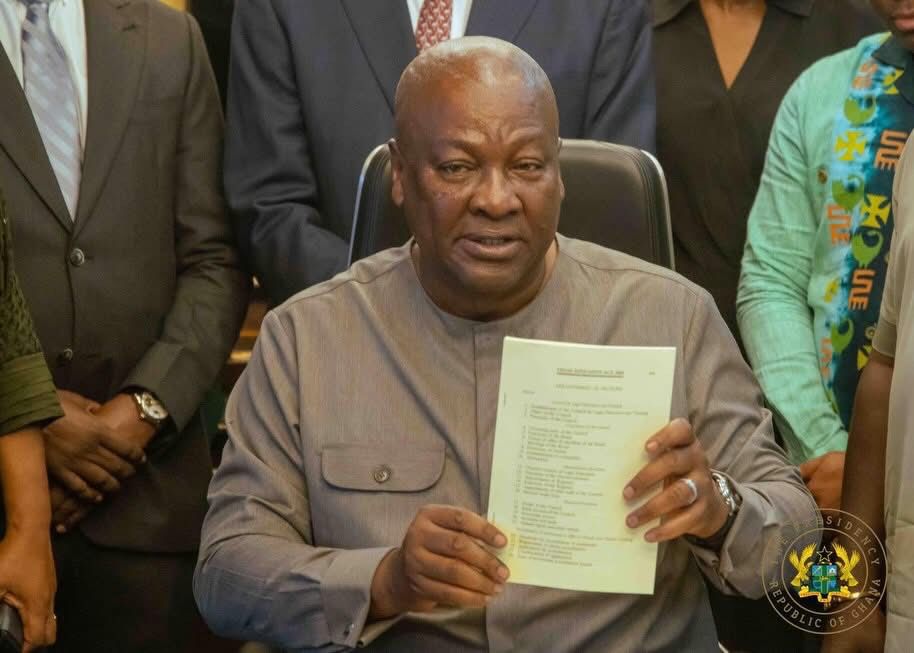
On governance and accountability, President Mahama said the Governance Advisory Council Act fulfils one of his key promises to promote transparency and public trust in leadership.
He described the independent body as an important institution that would support efforts to combat corruption and ensure accountability in public service.
The President concluded his statement with the hashtag “#ResettingGhana,” reinforcing his administration’s broader agenda of institutional reforms and national development.
Sompaonline.com/Derrick Djan