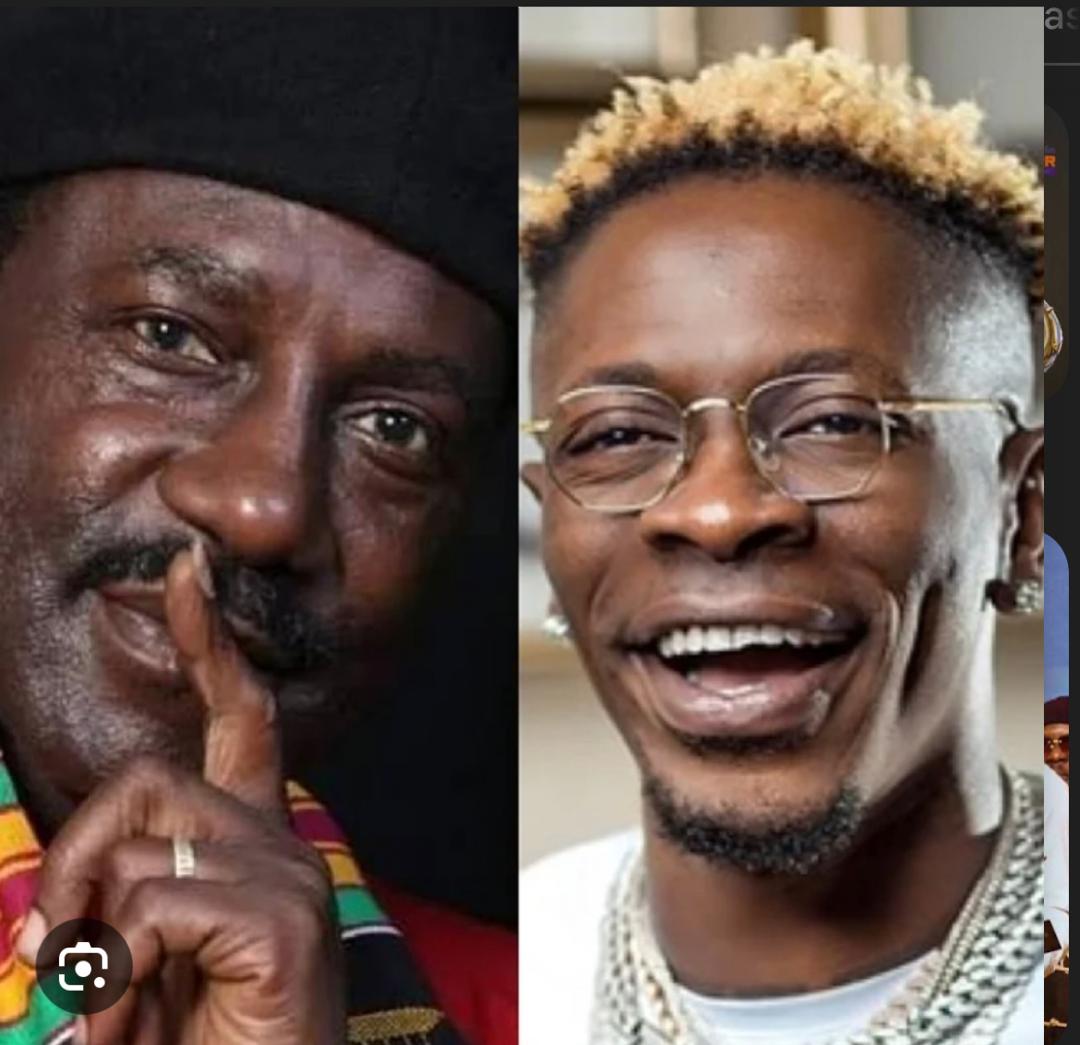

A fresh debate has emerged in Ghana’s music space following claims by veteran highlife musician Gyedu-Blay Ambolley that he is the true originator—and therefore “king”—of rap music.
This statement has stirred conversation across radio, social media, and the entertainment industry, especially when compared to the influence of dancehall giant Shatta Wale.
THE SOMPA DELIGHT DISCUSSION
In today’s edition of Sompa Delight, an entertainment show on aired on Sompa 106.5FM in Accra, Madam Abena Ruthy, hostess of the show raised the issue, referencing comments made by Shatta Wale.
In a surprising and mature response, Charles Nii Armah also known as Shatta Wale openly expressed respect for Ambolley, acknowledging that he listened to his music growing up. This statement shifted the tone of the debate from confrontation to appreciation.
Other guests on the show, Uncle Fred and Rev Eddie Eyison, commended the ‘dancehall king’ hitmaker, Shatta Wale for demonstrating humility and honoring a pioneer.
WHY AMBOLLEY’S CLAIM DOESN’T FULLY HOLD
There is no doubt that Gyedu-Blay Ambolley is a legend. In fact, he is widely credited for pioneering a style known as “Simigwa,” which blended highlife with rhythmic spoken-word delivery—something that resembles early rap forms.
However, calling him the “King of Rap” in the modern sense presents several challenges:
- RAP AS A GLOBAL GENRE HAS DISTINCT ROOTS
Rap music, as globally recognized today, originated from the hip-hop culture of the United States in the 1970s. While Ambolley developed a similar style independently, the global structure, evolution, and commercialization of rap cannot be solely attributed to him.
- INFLUENCE VS. EVOLUTION
Ambolley may be a pioneer of rap-like delivery in Ghana, but modern Ghanaian rap has evolved through multiple generations of artists—each contributing uniquely to the genre.
- SHATTA WALE’S IMPACT CANNOT BE IGNORED
Although primarily a dancehall artist, Shatta Wale’s influence on Ghana’s music industry is massive. His dominance, fanbase, hit records, and international reach position him as a modern-day musical force—though not strictly a rapper.
A MATTER OF TITLES AND CONTEXT
The real issue may not be who is “king,” but how we define greatness.
Ambolley represents foundation and innovation
Shatta Wale represents dominance and cultural impact
These are two different dimensions of musical excellence.
UNITY OVER COMPETITION
What stood out most in this discussion is not the claim itself, but the response it generated. Shatta Wale’s respect for Ambolley reflects a crucial lesson for the industry: honor the past while building the future.
As emphasized by Rev Eddie Eyison and uncle Fred on Sompa Delight, Ghana’s music industry grows stronger when legends and current stars uplift each other rather than compete for titles.
FINAL THOUGHT
Gyedu-Blay Ambolley may be a pioneer of rap-style music in Ghana, but the title “King of Rap” is far more complex—rooted in global history, influence, and evolution.
Rather than debate supremacy, perhaps the industry should celebrate both men for what they truly are:
A legend who started something unique, and a star who continues to shape the culture today.
Sompaonline.com/Editorial desk