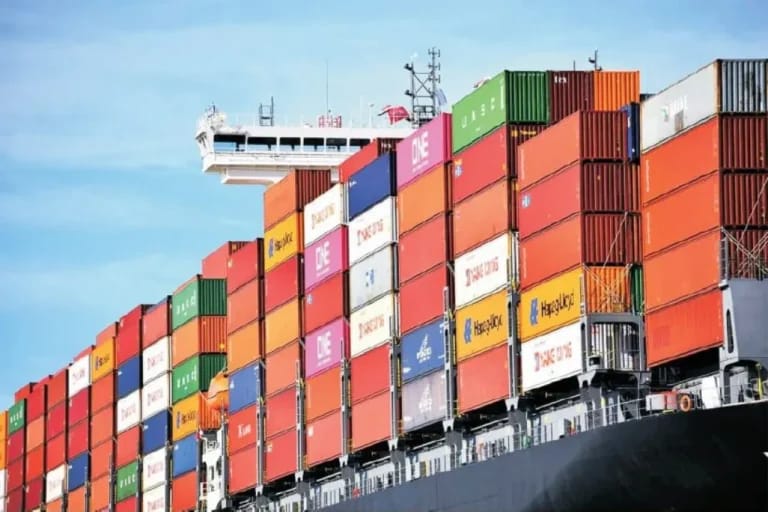

In a statement that highlights the critical issues affecting trade competitiveness in Ghana, the policy think tank, SARL Africa: Centre for Logistics and Trade Facilitation, has appealed to the government to entirely eliminate shipping line administrative charges.
They have characterized these charges as not only economically unjustifiable and outdated but also as a hidden financial burden that significantly hampers the competitiveness of trade for local businesses.
In a comprehensive policy advisory dated April 30, 2026, SARL Africa addressed their concerns directly to the Ministry of Transport.
The think tank specifically focused on the controversial Container Administrative Charge, which is also referred to as the documentation fee. They strongly argued that this charge has long surpassed its intended purpose and has now become an unfair and unnecessary cost imposed on both importers and exporters operating within Ghana.
Their insistence on this matter was prompted by the recent announcement from the Ghana Shippers’ Authority (GSA), which decided to place a cap on the charge at GH¢550 per twenty foot equivalent unit (TEU), effective starting May 1, 2026.
While SARL Africa acknowledged this cap as a form of necessary interim relief for the affected stakeholders, they hastened to clarify that such a measure fails to address the fundamental issue at hand the very existence of the charge itself.
Delving deeper into the historical context, SARL Africa noted that the Container Administrative Charge was initially introduced in the late 1980s with the intent to offset the manual costs associated with port documentation and handling.
However, they assert that there is now no valid justification for its continued existence, especially in light of significant modern upgrades that have been made at Ghana's ports, including the state-of-the-art facilities located at both Tema and Takoradi.
The infrastructure deficiencies that necessitated the imposition of this administrative charge no longer exist,” stated the report, highlighting the advancements in digitization and overall port efficiency as pivotal factors that render the fee obsolete in today's trading environment.
In their analysis, the group described the levy as a structural anomaly that negatively impacts Ghana’s shipping cost justification framework. One of the central concerns outlined in their report is the considerable revenue generated by this charge, which is estimated to be GH¢1.69 billion annually.
SARL Africa contends that this immense sum represents an unjust wealth transfer, pulling financial resources from Ghanaian traders directly into the coffers of foreign shipping lines.
Direct costs to shippers amounting to GH¢1.69 billion every year signify a direct and disproportionate transfer of wealth from local Ghanaian businesses to foreign-owned shipping lines. Alarmingly, most of this revenue is sent back to parent companies located abroad, resulting in significant foreign exchange outflows that yield no corresponding benefits to the Ghanaian economy, they argued.
The Container Administrative Charge possesses no defensible economic, legal, or operational justification, the report succinctly concluded, emphasizing that its existence stands in stark contrast to global trade practices and international maritime standards.
To bolster their position, the think tank made comparisons between Ghana’s current system and international benchmarks found in various jurisdictions, including the European Union, the United States, Singapore, China, and the United Arab Emirates. In these regions, documentation fees, if they exist at all, are generally modest, based on actual costs, and directly linked to bills of lading instead of being unfortunate assessments tied to container volumes.
Additionally, the report referenced specific global trade regulations established by the World Trade Organization (WTO), particularly highlighting the WTO Trade Facilitation Agreement and Article VIII of GATT 1994, both of which stipulate that trade-related fees should be limited strictly to the actual costs of the services provided.
Beyond the legal and policy implications, SARL Africa cautioned about the broader economic ramifications of maintaining such a charge. They warned that the Container Administrative Charge contributes to higher import costs, adds inflationary pressure, negatively affects the competitiveness of Ghanaian ports, and ultimately acts as a deterrent for foreign investment.
The group further cautioned that if port pricing continues to remain uncompetitive, Ghana risks losing valuable transit trade to neighboring countries such as Togo, Benin, and Côte d’Ivoire, which could otherwise benefit from the flow of goods and services through its ports.
While SARL Africa has expressed appreciation for the GSA's recent intervention to cap charges, they maintain that this action alone is insufficient. “While the directive is a commendable corrective measure, it fails to tackle the fundamental issue of whether the charge should exist at all,” the report stated.
As a solution, SARL Africa is advocating for a phased abolition of the charge, suggesting a thorough audit of shipping line charges and the transition to a freight-inclusive cost model that aligns with international best practices.
Furthermore, they called upon Ghana to establish itself as a regional leader in transparent maritime pricing, which is crucial in the context of broader efforts aimed at supporting the African Continental Free Trade Area (AfCFTA).
The Container Administrative Charge is nothing short of an anachronism, and its persistent existence undermines trade, burdens consumers, and ultimately weakens Ghana’s competitiveness,” the report effectively concluded.
The policy advisory has been disseminated to key stakeholders, including the Presidency, Parliament, various business associations, influential freight forwarders, and vital trade groups operating across the country, in order to galvanize widespread support for the proposed reforms.
Sompaonline.com/Bismarck Oppong