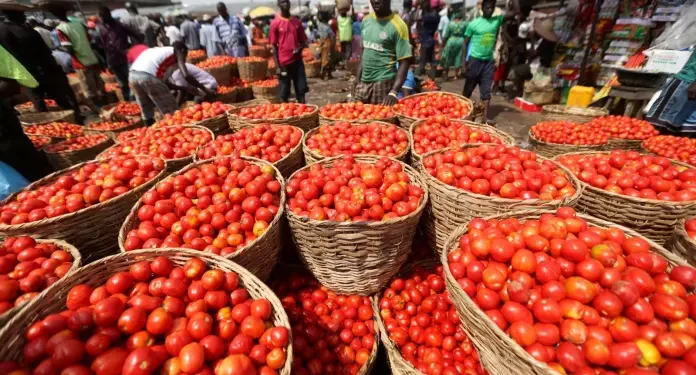

The Vegetable Producers and Exporters Association of Ghana is calling for an urgent, coordinated response involving government, industry players, and local agricultural researchers to address the impact of Burkina Faso’s ban on tomato exports to Ghana.
Government officials are currently engaged in discussions with Burkina Faso following its recent decision to halt tomato exports
The talks are aimed at reaching a mutually beneficial resolution that preserves long-standing trade relations between the two neighbouring countries, while addressing the concerns that led to the restriction.
In an interview with Citi Business News, the President of the Association, Dr. Felix Kamassah, warned that the development poses a significant threat to Ghana’s vegetable supply chain and could trigger price instability if swift interventions are not implemented.
“Policymakers, producers, and researchers must come together and solve this issue once and for all,” he said, revealing that the Association is already engaging with the Ministry of Food and Agriculture to find practical ways to address the situation.
Dr. Kamassah added that the concerns being raised are not new, noting that industry players have long warned about Ghana’s heavy reliance on imported tomatoes.
“I have been voicing out on this issue long ago—and now it has happened,” he stated.
He further urged policymakers not to handle the issue in isolation but to work closely with those directly involved in food production.
“Policymakers shouldn’t leave it in their domain alone. They have to seriously work with the practical people on the ground,” he emphasized.
According to him, farmers and producers possess critical insights into the country’s agricultural landscape, including seasonal production patterns and suitable cultivation zones.
“We understand how production works in this country – the areas we can grow tomatoes at different times, and where we can expand,” he explained, pointing to innovations such as greenhouse farming as part of the solution.
Dr. Kamassah also called for increased investment in irrigation and year-round farming.
“We have to encourage the Ministry to look for funding and invest in this so we can produce throughout the year,” he said, adding that such measures would help prevent recurring supply disruptions.
“That will help the country so that we won’t keep facing this issue,” he concluded. “Because every household depends on tomatoes every single day.”
In February 2026, seven Ghanaian tomato traders were killed and others injured in an ambush by armed militants in the northern Burkinabè town of Titao.
The attack, which occurred during a routine trading trip, highlighted the growing risks facing cross-border commerce.
Credit/citinews